
How Long Does Botox Really Last?
"3 to 4 months" is the answer you'll see everywhere, and it's a reasonable average. But it's an average, not a guarantee, and the range around it is wide enough that it's worth understanding what actually drives how long your specific results last.
Key Takeaways
- • Typical duration is 3 to 4 months, with a range of roughly 2 to 6 months.
- • Duration depends on dose, the specific muscle treated, and individual metabolism.
- • First treatments sometimes wear off faster than later ones.
- • Full results take up to 2 weeks to develop, so judge duration from that point, not from injection day.
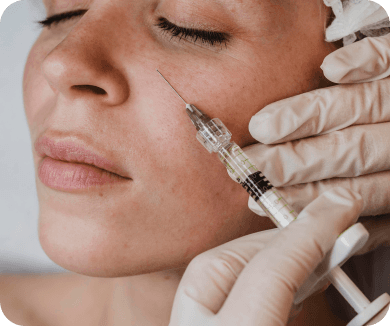
The mechanism behind the timeline
Botox works by blocking the nerve signal that tells a specific muscle to contract. Over time, the nerve ending forms new connections to the muscle, restoring normal movement. That regeneration process is what eventually brings your expression lines back, not the product "running out." Research on the mechanism describes injected muscles weakening over the first several days and gradually recovering over roughly 2 to 4 months as new nerve terminals restore function.
Why duration varies so much between people
A few factors consistently show up as drivers of how long results last:
- Dose: A higher unit count in a given muscle generally lasts longer than a conservative, minimal dose in the same area.
- Muscle strength: Stronger, more frequently used muscles, like the masseter, can behave differently than smaller, finer muscles around the eyes.
- Metabolism: Individual metabolic rate affects how quickly the body clears and adapts to the treatment.
- Treatment history:Many patients report somewhat longer-lasting results after several consistent treatments, though this isn't guaranteed for everyone.
Does it last longer in some areas than others?
It can. A treatment plan covering both the forehead and temple area and a stronger muscle group like the masseter may show slightly different timelines for each area, since each muscle metabolizes the treatment somewhat independently. This is normal, and it's one reason a single "how long does Botox last" answer doesn't apply evenly across every treatment area on your face.
When to book your next appointment
Rather than counting exactly to the 3-month mark, watch for early signs of movement returning, subtle at first, in the treated muscle. Booking a follow-up when you notice that early movement, rather than waiting until results have fully worn off, tends to keep results looking consistent over time instead of cycling between "fully treated" and "untreated." If you're not sure whether what you're seeing is normal fading or an under-treated area from your first session on your specific concern, that's worth a quick check-in rather than guessing.
Wondering if your results are on track?
If your results wore off faster or slower than expected, it's worth a conversation about dose and timing before your next appointment.